The Mansabdari Trap: Why Your Career Needs Leverage
 Priya Shah Fact-Checker & Contributing Writer 19 min read
The Mansabdari Trap: Why Your Career Needs Generational Compounding, Not Just Prestige
Most career counseling sessions begin with the wrong questions: What are your interests? What subjects do you enjoy? What is the cut-off score for this competitive exam?
These questions view an individual’s professional journey as an isolated sprint spanning 35 to 40 years. They operate on the assumption that a career begins the day you enter the workforce and ends cleanly the day you collect your retirement gratuity.
However, if you observe families that achieve sustainable prosperity, societal influence, and autonomy over multiple generations, you quickly realize they do not treat careers as isolated individual events. They treat careers as intergenerational relay races.
The fundamental flaw in middle-class and upper-middle-class career selection is the failure to distinguish between rented institutional prestige and compounding professional capital. When you choose a career whose benefits vanish the minute you retire, you subject your children to the exact same starting line you faced decades ago.
To understand why this happens, we must step back more than four centuries to examine an administrative innovation from the Mughal Empire: the Mansabdari System.
1. The Historical Precedent: Akbar’s Mansabdari System of 1571
In 1571, the Mughal Emperor Akbar formalized an administrative and military mechanism known as the Mansabdari System. It was a masterclass in bureaucratic centralization designed to solve a perennial problem for empires: how to extract maximum competence and loyalty from talented leaders without allowing them to establish hereditary power bases that could challenge the imperial throne.
+--------------------------------------------------------------------------+
|                       THE MANSABDARI ARCHITECTURE                         |
|                                                                          |
|  [ Imperial Throne ] ---> Grants Rank (Zat & Sawar)                      |
|          │                                                               |
|          ├──> High Remuneration & Authority (During Lifetime)            |
|          ├──> Obligation to Maintain Troops, Horses & Administration      |
|          │                                                               |
|  [ Upon Death / Retirement ]                                             |
|          └──> Immediate Escheat: Property, Troops & Rank Revert to State |
|          └──> Descendants Inherit NOTHING of the Title                   |
|          └──> Next Generation Must Restart from Step Zero                |
+--------------------------------------------------------------------------+
How the Mechanism Worked
Under this framework, every officer was assigned a numeric rank (mansab) comprising two metrics:
- Zat: Determined the officer’s personal status and salary.
- Sowar: Dictated the number of cavalrymen and horses the officer was required to maintain for imperial service.
A high-ranking Mansabdar might receive an immense monthly allocation—say, 3,000 to 5,000 rupees in contemporary imperial currency—a fortune at the time. With this capital, he maintained his contingent of cavalry, sustained his household, exercised sweeping civic and military authority, and lived an opulent lifestyle.
The Catch: Zero Generational Inheritance
The defining genius of the system lay in the doctrine of escheat. The rank was neither hereditary nor transferable:
- The Mansabdar did not own the underlying land (jagir); he merely possessed the temporary right to collect revenue to service his expenses.
- When a Mansabdar died or retired, his title, official authority, and state assets instantly reverted to the Crown.
- His children could not simply take over his command. If his sons wished to enter imperial service, they had to prove their personal utility, petition the Emperor, and begin at the lowest rungs of the administrative ladder.
The Mansabdar spent his entire life working under immense responsibility, enjoying high status while active, but left behind zero structural leverage for his lineage. He had simply rented his power from the sovereign.
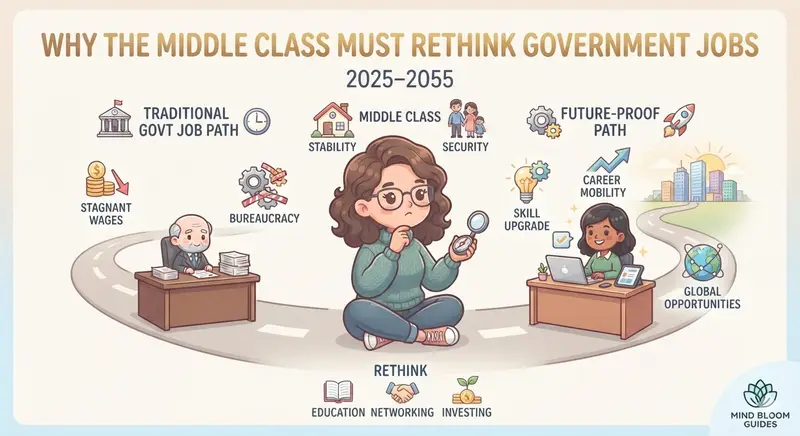
2. Modern Mansabdars: The Fallacy of Institutional Prestige
Fast-forward to the present day. While four centuries have elapsed, the operational mechanics of many of our most sought-after careers remain identical to the Mansabdari framework.
Consider the classic institutions of Indian public and bureaucratic service:
- Civil Services (IAS, IPS, IRS, State Administrative Cadres)
- The Armed Forces and Central Armed Police Forces (Army, Navy, Air Force, BSF, CRPF)
- State and Central Police Departments
- Public Sector Undertakings (PSUs) and Regulatory Authorities
These professions represent the pinnacle of service, honor, and social prestige in the public consciousness. A senior civil servant or high-ranking military commander commands immense societal deference, manages extensive administrative machinery, and wields vast legal and executive power.
========================================================================================
             INSTITUTIONAL PRESTIGE vs. INHERITABLE PROFESSIONAL LEVERAGE
========================================================================================
CRITERION             BUREAUCRATIC / CORPORATE EMPLOYMENT   INDEPENDENT PRACTICE / FIRM
----------------------------------------------------------------------------------------
Source of Power       Derived entirely from the chair       Derived from owned expertise
Client Retention      None (All relationships belong to     High (Direct relationships
                      the institution)                      compound over decades)
Physical Assets       Government/Corporate housing          Owned clinic, chambers,
                      and vehicles (Surrendered upon exit)   studio, or office space
Generational Relay    Zero inheritance; children must sit   Direct onboarding, apprenticeship,
                      for baseline entrance examinations    and client handover
Geographic Capital    Fragmented through regular transfers  Deeply rooted local ecosystem
========================================================================================
The Inevitable Generation-Zero Reset
The day an officer superannuates, the reality of the Mansabdari model sets in:
- The official vehicle with the beacon is returned to the motor pool.
- The government bungalow in the cantonment or civil lines must be vacated within months.
- The personal security detail, the staff, and the daily administrative machinery vanish overnight.
- The telephone stops ringing with the same urgency.
What remains? A pension, a retirement corpus, and a title that must now carry the prefix “Retired” or “Ex-.”
Crucially, none of the professional capital accumulated over 35 to 40 years can be handed over to their children.
If a Secretary to the Government of India or a Director General of Police has a son or daughter who wishes to enter the same profession, that child receives zero structural head start:
- They cannot inherit their parent’s seniority.
- They cannot skip preliminary screening.
- They cannot bypass the cut-throat competitive examination gauntlet.
- They must sit in the same coaching centers, memorize the same foundational syllabi, face the exact same lottery-like statistical odds, and begin at step zero.
The parent’s 40 years of sacrifice, domain expertise, institutional navigation, and professional relationships are economically non-transferable. The family’s professional momentum resets to the baseline every single generation.
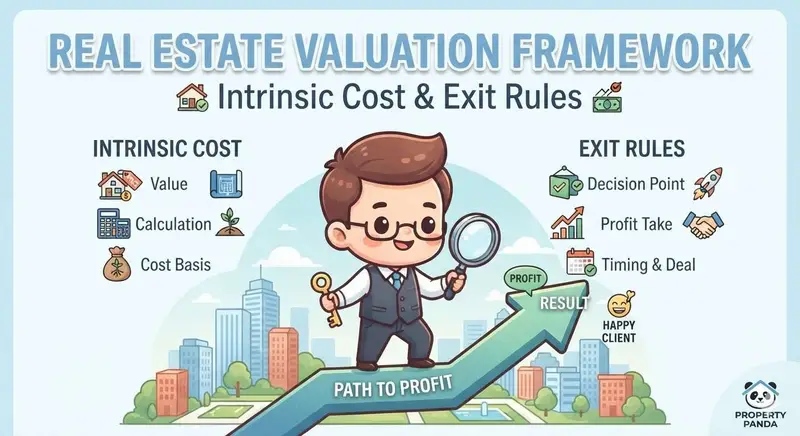
3. The Power of Transferable Professional Ecosystems
Now examine the alternative paradigm: professions rooted in private practice, proprietary domain knowledge, and owned infrastructure.
Consider the family structures of established independent professionals:
- The Independent Legal Practitioner: An advocate who spends 35 years building a trial or corporate practice, curating an extensive law library, establishing an office, understanding judicial nuances, and earning a reliable clientele.
- The Medical Specialist: A doctor couple that establishes a private nursing home, diagnostic center, or specialized clinical practice.
- The Chartered Accountant: A partner in an independent audit and advisory firm with an established book of recurrent corporate retainers.
- The Architect and Spatial Designer: A practitioner with a portfolio of completed projects, a network of contractors, and ongoing relationships with developers.
+--------------------------------------------------------------------------+
|                    THE COMPOUNDING PROFESSIONAL RELAY                    |
|                                                                          |
|  GENERATION 1 (Parent):                                                  |
|  [Builds Office] ──> [Acquires Clients] ──> [Establishes Market Trust]   |
|                                                     │                    |
|                                                     ▼                    |
|  GENERATION 2 (Child):                                                   |
|  Enters at Step 10 ──> Inherits Systems ──> Scales Service Offerings     |
|                                                     │                    |
|                                                     ▼                    |
|  GENERATION 3:                                                           |
|  Multi-partner firm / Integrated group with substantial market dominance |
+--------------------------------------------------------------------------+
Case Study A: The Independent Legal Practice
When a young law graduate steps into the market without family backing, the initial decade is brutally unforgiving. They must struggle for chamber space, hunt for briefing clients, take low-paying briefs, and decode courtroom dynamics through trial and error.
Conversely, consider the child of an established advocate who pursues law:
- Immediate Platform: The child does not need to secure a desk; the office, chambers, junior associates, and legal library are already in place.
- Mentorship & Nuance: The parent can transition domain expertise directly over the dining table and during joint courtroom appearances.
- Client Transition: Over a 10-to-15-year overlapping window, the parent introduces the child to long-standing clients. The handoff is gradual, organic, and backed by inherited goodwill.
- Elevation Point: The child does not begin at step zero. They begin at step seven or eight, spending their youthful prime expanding the firm, diversifying into emerging legal domains (such as intellectual property, technology regulation, or international arbitration), and compounding existing family capital.
Case Study B: The Healthcare Infrastructure
A first-generation physician graduating from medical school faces decades of grueling shifts, corporate hospital politics, or astronomical capital expenditures to establish a standalone clinic.
Compare this to a child born into a medical family with an established clinic or specialized practice:
- Even if the child possesses identical academic qualifications to their peers, their trajectory of operational leverage is radically different.
- The physical infrastructure, diagnostic machinery, regulatory licenses, administrative staff, and local patient trust are pre-installed assets.
- The child steps straight into an active operating environment. They do not need to spend their early career worrying about commercial survival; they can focus on advanced clinical sub-specialization and scaling the institution.
4. The Geographic Penalty: The Nomadic Career vs. Rooted Social Capital
One of the most under-discussed trade-offs of modern institutional careers is the hidden cost of constant physical relocation.
Many public-sector and corporate career paths mandate regular transfers every two to three years across different cities, states, or operational zones:
$$\text{Long-Term Resilience} = \text{Domain Competence} \times \text{Rooted Social Capital} \times \text{Inheritable Infrastructure}$$
When a professional relocates every 36 months, their capacity to build localized, compounding value is systematically erased:
1. Social Capital Stays Superficial
Real societal influence is hyper-local. It is built on multi-decade relationships with neighborhood communities, local business owners, city administrators, legal specialists, and civic leaders.
When you leave a city every few years, your network remains largely confined to fellow transient colleagues living within gated institutional enclaves. You never take root.
2. Physical and Real Estate Capital Remains Under-Optimized
Nomadic professionals often spend their entire productive lives in subsidized official quarters. While comfortable, this housing must eventually be vacated.
Families caught in this cycle frequently buy a flat or property in a distant city where they do not currently reside. They cannot actively monitor it, cannot leverage it for commercial utility, and often struggle to maintain it.
By contrast, a rooted professional family acquires property within their own operational ecosystem:
- The ground floor serves as the medical clinic, the architecture studio, or the law chamber.
- The upper floors house the family.
- The asset yields immediate operating cash flow, appreciates steadily, and provides structural stability for the next generation.
+--------------------------------------------------------------------------+
|                  THE GEOGRAPHIC TRAJECTORY DILEMMA                       |
|                                                                          |
|  NOMADIC PATH (Public / Corporate Transfers):                            |
|  City A (3 yrs) ──> City B (2 yrs) ──> City C (4 yrs) ──> Retirement    |
|  [Result: Shallow local roots, high social dislocation, single home]     |
|                                                                          |
|  ROOTED PATH (Independent / Regional Ecosystem):                         |
|  Single Strategic City ──> Deep Commercial Networks ──> Physical Hub    |
|  [Result: High civic standing, cross-generational network, compounding]   |
+--------------------------------------------------------------------------+
3. The Generational Dislocation Loop
When parents move continuously, their children are uprooted across different schools, peer environments, and regional cultures.
While this adaptability can foster open-mindedness, it often robs the child of a stable peer cohort. They grow up without childhood friends who eventually evolve into local business partners, trusted family advisors, or professional collaborators.
When that child enters adulthood, they often find themselves forced to embark on the exact same nomadic loop, migrating from metro to metro, starting their social and economic networks from absolute scratch.
5. Deconstructing the “Passion” Fallacy
In contemporary discourse, a ubiquitous piece of advice handed to young adults is: “Follow your passion.”
This guidance sounds liberating, but it is often deeply misleading—particularly for middle-class and upper-middle-class families navigating dynamic, competitive economies.
Passion is an Emotion; Careers Are Economic Engines
Passion is a dynamic, fluctuating emotional state. What a 19-year-old feels passionate about is rarely what they will care about at 35 or 50:
- A student develops an interest in biotechnology, spends four years completing an expensive undergraduate degree, and realizes by year three that the domestic industrial market for laboratory research is small, low-paying, and capital-starved.
- Disillusioned, they pivot to a postgraduate degree in digital animation or media studies, only to realize that artificial intelligence workflows and relentless client-service deadlines compress margins and job stability.
- By age 26 or 27, having cycled through disconnected degrees without building deep market competence, they panic, abandon their past credentials, and spend three years studying in a cramped apartment for generic civil service or banking recruitment exams.
This revolving door of disconnected pursuits represents an enormous misallocation of young human capital.
                  THE PASSION PIVOT SPIRAL

    [Age 18] High-interest enrollment (e.g., Niche Life Sciences)
       │
       ▼
    [Age 21] Market Reality Shock: Low compensation / Few openings
       │
       ▼
    [Age 23] Academic Pivot to Unrelated Field (e.g., Media/Design)
       │
       ▼
    [Age 26] Burnout & Instability: Zero structural compounding
       │
       ▼
    [Age 27+] Panic Pivot to Competitive Exams / Entry-Level Reset
The Alternative: Competence, Capital, and Leverage
Sustainable career satisfaction does not stem from chasing transient feelings; it stems from autonomy, mastery, and economic leverage:
- When you become exceptionally competent at a high-value skill that the market actively demands, financial rewards and professional autonomy follow.
- When you have autonomy over your schedule and clear ownership of your output, you naturally become passionate about what you build.
Before permitting a child to jump from one educational track to another under the banner of “exploring interests,” parents and mentors must ask rigorous, market-facing questions:
- What does the supply-and-demand curve look like for this specific skill set over the next two decades?
- Does this career create proprietary assets, or does it merely trade units of physical time for a flat monthly fee?
- Can anything created in this career be inherited, licensed, sold, or shared with the family?
6. The Class-Specific Playbook: Who Can Afford What?
A critical caveat must be articulated clearly: Career strategy is strictly relative to a family’s current socioeconomic baseline.
There is no universal blueprint that applies equally to every household. What represents brilliant strategy for one family tier can represent reckless risk for another.
+--------------------------------------------------------------------------+
|                  SOCIOECONOMIC BASELINES & STRATEGIC PRIORITIES           |
+--------------------------------------------------------------------------+
|  SUBSISTENCE & LOWER-MIDDLE CLASS:                                       |
|  * Primary Goal: Risk mitigation, baseline floor, basic security         |
|  * Optimal Vector: Public sector jobs, defense, structured employment     |
|  * Logic: Escapes poverty; provides healthcare, pension, and stability   |
+--------------------------------------------------------------------------+
|  ESTABLISHED MIDDLE & UPPER-MIDDLE CLASS:                                |
|  * Primary Goal: Compounding leverage, asset creation, autonomy          |
|  * Optimal Vector: Private practices, specialized firms, enterprise      |
|  * Logic: Safety floor is already secured; repeating step zero is waste  |
+--------------------------------------------------------------------------+
For Families Building Their Baseline
For a rural household or an urban working-class family with zero safety net, securing a government job—whether as a primary school teacher, railway clerk, police constable, or paramilitary sub-inspector—is a transformative triumph:
- It establishes an immediate financial floor.
- It guarantees a regular salary, insulation from market volatility, and structured medical care.
- It elevates the family’s societal status and eradicates generational vulnerability.
For this demographic, pointing out the lack of inheritance is beside the point. The imperative is survival, stability, and immediate risk elimination.
For the Established Middle and Upper-Middle Class
The central critique of this guide is directed at families who are already past the survival threshold:
- The father is already a senior engineer, a director in a multinational corporation, a bank executive, or a Class-I gazetted officer.
- The mother is an established educator or institutional professional.
- The family already owns an apartment, holds reasonable financial reserves, and has educated their children in quality English-medium schools.
When children from these households spend five of their most creative, energetic adult years (from age 21 to 26) sitting inside small study rooms memorizing static general knowledge to pass government recruitment exams, it represents a severe strategic misstep.
Their parents spent 35 years building a comfortable launchpad specifically so the next generation would not have to fight for basic survival. For those children to simply aim for the exact same safety floor their parents secured is a failure of vision and strategic execution.
7. The 22–25 Age Crisis: Inertia in the Post-Pandemic Economy
A concerning phenomenon visible across modern urban households is the cohort of young adults aged 22 to 26 caught in a state of suspended animation.
Many completed their degrees during or immediately after the disruption of the global pandemic. Facing an evolving job market driven by rapid automation, shifting corporate structures, and economic realignments, many have opted to wait.
The Illusion of the “Perfect External Opportunity”
A surprising number of educated young people believe that:
- The current job market slump is a temporary glitch that will instantly correct itself.
- If they simply stay at home and submit generic online applications, an ideal, high-paying corporate role will magically materialize.
- Preparing for competitive entrance exams indefinitely is a socially acceptable substitute for active market engagement.
Preparation for competitive examinations often becomes a psychological shelter. It provides a convenient answer to the awkward societal question, “What are you doing these days?”
It carries the veneer of hard work while completely shielding the individual from the real-world friction of testing their skills in the open marketplace.
THE INACTION EQUATION:
[Extended Exam Prep / Waiting] = Zero Cashflow + Zero Network + Zero Skill Accrual
                                 + Compounding Resume Gap
The Realities of the Modern Economic Landscape
The reality of the modern economy is stark:
- The Middle-Tier Corporate Job is Shrinking: Automation, offshore restructuring, and lean managerial staffing mean that comfortable, average-effort corporate desk jobs are declining rapidly.
- The Rise of the Skills-and-Retainer Model: Organizations increasingly prefer agile contractors, domain specialists, niche consultants, and revenue-generating talent over large standing administrative armies.
- Speed of Skill Depreciation: Sitting idle for three years while studying static textbooks degrades modern workplace skills. Tools, software, workflows, and communication rhythms change quickly; candidates who stay off the field rapidly lose operational relevance.
If you are 23 years old today, sitting idle while waiting for conditions to become comfortable is the most dangerous path available. You must connect with active operators, seek rigorous mentorship, and place yourself in environments where real commercial transactions occur.
8. Strategic Action Plan: How to Build an Inheritable Career Path
If you are a parent assessing your family’s trajectory, or a young adult looking to design a career that compounds over time, use the following operational framework.
+--------------------------------------------------------------------------+
|                  THE 4-STEP CAREER COMPOUNDING AUDIT                     |
+--------------------------------------------------------------------------+
|  STEP 1: CAPITAL AUDIT                                                   |
|  Map all existing family networks, client relationships, and hard assets |
+--------------------------------------------------------------------------+
|  STEP 2: THE INHERITABILITY TEST                                         |
|  Ask: "Can 30% or more of this operational base be passed forward?"       |
+--------------------------------------------------------------------------+
|  STEP 3: GEOGRAPHIC ANCHORING                                            |
|  Choose a resilient primary base to consolidate social & physical roots  |
+--------------------------------------------------------------------------+
|  STEP 4: INTEGRATED APPRENTICESHIP                                       |
|  Structure young adulthood around real domain mastery, not just degrees  |
+--------------------------------------------------------------------------+
Step 1: Conduct an Unflinching Family Capital Audit
Before selecting an academic or professional path, catalog the assets your family already possesses:
- Intellectual Capital: What specific domain expertise does the family understand deeply? (e.g., Taxation, civil litigation, construction, logistics, manufacturing, clinical care).
- Network Capital: Who respects your parents enough to pick up their phone calls immediately? Which business communities, trade associations, or professional bodies do they know well?
- Physical Infrastructure: Does the family own unencumbered commercial real estate, land, office space, or clinical setups that could serve as an operational base?
Your career vector should ideally intersect with at least one—and preferably two—of these existing capital pools.
Step 2: Apply the “Inheritability Test”
Evaluate every prospective career path against this central diagnostic question:
“If I work in this field for 30 years with exceptional diligence, what tangible components of my operation can my children or trusted protégés legally, ethically, and practically utilize?”
- If the answer is “Nothing except my pension and whatever money I saved,” understand that you are entering a Mansabdari framework. Proceed with your eyes wide open, recognizing that you are building an isolated career that cannot be handed off.
- If the answer is “They can step into my existing client retainers, take over my office infrastructure, learn my specialized workflows, and build upon my institutional reputation,” you are creating a compounding professional asset. Prioritize this path.
Step 3: Prioritize Geographic Anchoring Over Nominal Rank
A career that pays 20% less on paper but allows you to remain rooted in a single, economically vibrant regional hub often yields vastly higher lifetime wealth than a nomadic role that shuffles you across multiple distant cities:
- Staying rooted lets you buy and optimize real estate early.
- It lets you convert acquaintances into multi-decade business relationships.
- It enables your children to establish deep, stable roots in an environment where they can build real social capital.
Step 4: Shift from Educational Consumerism to Direct Apprenticeship
A third academic degree is rarely the answer to career uncertainty. Stop buying generic credentials from institutions that bear zero liability for your employment outcomes.
Seek out active, high-performing independent practitioners—whether in corporate law, commercial architecture, direct-to-consumer manufacturing, or advisory services:
- Work under them directly, even if the starting compensation is modest.
- Learn the business end of the profession: how clients are acquired, how cash flow is managed, how regulatory friction is handled, and how staff is retained.
- Build real-world operational competence. That is the only foundation upon which durable personal leverage can ever be built.
Summary Matrix: Making the Strategic Pivot
========================================================================================
STRATEGIC DIMENSION       THE DEFAULT MIDDLE-CLASS MINDSET    THE COMPOUNDING FAMILY MINDSET
========================================================================================
Primary Objective         Individual job security and         Family operational leverage and
                          perceived social status             intergenerational continuity
Guiding Philosophy        "Follow your fluctuating passion"   "Build market mastery and
                                                              own your infrastructure"
Approach to Power         Rent authority from an institution  Build personal equity, client
                          or corporate employer               trust, and physical assets
Geographic Strategy       Nomadic; go wherever transfers      Anchor deeply in an economic hub;
                          or corporate postings dictate       build multi-decade local leverage
Generational Hand-off     Reset to zero every generation;     Direct relay; next generation
                          everyone takes fresh exam rounds    begins at step seven or eight
========================================================================================
True economic freedom is not measured by the size of your institutional title or the temporary authority granted to your office chair. It is measured by the degree of autonomy and compounding leverage you leave behind for those who come after you.
Do not spend 40 years fighting your way to the top of a mountain only to hand your children a ticket back to the bottom of the valley. Choose a career that lets your family build on its momentum, generation after generation.
Frequently Asked Questions
What is the 'Mansabdari Trap' in modern career planning?
It refers to prestigious positions—such as bureaucratic roles, military ranks, or corporate posts—where the authority, network, and institutional advantages cannot be legally or practically passed on to the next generation, forcing children to reset to step zero.
Is this career advice applicable to everyone?
No. For families transitioning out of poverty or lower-income strata, secure institutional and government jobs provide indispensable social security. This framework is specifically calibrated for middle and upper-middle-class families looking to build multi-generational compounding.
Why is 'following your passion' often counterproductive?
Passion is a volatile emotional state rather than an economic strategy. Chasing short-term interests without building mastery, capital, or market leverage often leads to serial qualification-hopping without creating long-term value.
What constitutes a 'transferable' or 'inheritable' professional career?
Careers in private legal practice, independent medical clinics, accounting firms, architecture, design consultancies, and family-owned enterprises where goodwill, infrastructure, client books, and domain knowledge can be directly transferred.
Written by
Priya Shah
Fact-Checker & Contributing Writer
Priya verifies every statistic and claim before publication and writes on consumer technology. She previously worked as a research assistant at a university economics department.
View full profile →