How to Overcome Regret and Missed Opportunities in 2026: The Complete Psychological Audit
 The OD Team Main Writer & Editorial Team 19 min read
Have you ever stared at your ceiling at 2:00 AM, replaying a single moment from three, five, or ten years ago?
Maybe it was a job interview you pulled out of. Maybe it was an offer in a new city you turned down, an ambitious business venture you didn’t launch, or a relationship where you hesitated to speak up.
You tell yourself: “If only I had stepped up and taken that risk back then, my career, wealth, and life would be on an entirely different level right now.”
Here is the truth: almost everyone in business and life carries this exact mental scar.
We treat our past hesitations as personal indictments, convincing ourselves that missing an opportunity proved we lacked ambition, drive, or courage.
But what if your self-criticism is fundamentally flawed?
What if the decision you made back then was the only rational move your mind and body could make under conditions you have completely forgotten today?
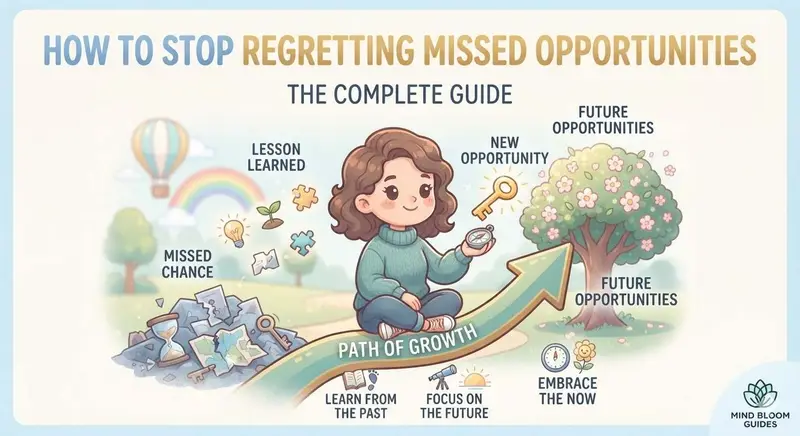
Let’s unpack the real psychology behind missed opportunities, deconstruct the toxic myth of hindsight bias, and build a repeatable blueprint to transform delayed courage into your single greatest competitive edge.
- Core Concept: Courage is not a permanent moral trait or character certificate; it is a situational energy created by visible and invisible backstage realities.
- High Impact Factor: Stop evaluating past choices using your present-day confidence. That confidence only exists today because you survived those past setbacks.
- Common Mistake: Confusing a necessary pause or season of stability with personal weakness, cowardice, or permanent failure.
- Actionable Step: Conduct a "Backstage Audit" on your heaviest regrets to catalog the invisible emotional, mental, and physical fatigue present when you hesitated.
The Foundation: The Hindsight Trap and Decision Anatomy
When we look back at our lives, our memory plays a cruel psychological trick on us.
Psychologists call it outcome bias combined with creeping determinism.
You look at a past fork in the road through the lens of everything you know today, stripping away the blinding fog, exhaustion, and confusion you were battling at that exact moment.
[The Regret Loop Architecture]

Past Event (High Fog + Zero Energy)
       │
       ▼
Years of Pain, Learning & Recovery
       │
       ▼
Present Self (High Clarity + New Confidence)
       │
       ▼
Self-Blame: "Why was I so blind back then?" ◄── (Cognitive Distortion)
Look at that loop closely.
Do you see the structural error?
You are holding your younger, less-resourced self to the standards, stamina, and mental clarity of the person you only became years later.
[Insert Screenshot Placeholder: Cognitive Distortion Matrix showing Hindsight Bias vs. Contextual Reality]
When you missed that interview, refused that promotion, or stayed put in your safe routine, you did not make a choice out of moral failure.
You made a calculation based on what was happening backstage.
Backstage is where your private life lives. It is the aging parent you were worrying about, the toxic burnout draining your dopamine, the imposter syndrome you had no tools to navigate, or the sheer financial anxiety keeping your nervous system in survival mode.
Courage is not a switch you can flip at will.
Courage requires mental bandwidth, emotional reserves, and contextual light.
If the room is pitch black and you have no fuel in the tank, pausing is not cowardice—it is your psychological preservation mechanism stepping in to keep you safe.
Classification: Where Your Mental Energy Should Go
If you want to free up mental bandwidth to seize the next big break, you have to audit where your internal energy is leaking.
Most professionals waste massive amounts of cognitive energy mourning past decisions they cannot rewrite.
Let’s separate the high-impact mental shifts that change your future from the low-impact self-sabotaging traps you need to eliminate immediately.
       ┌────────────────────────────────────────────────────────┐
       │             THE DECISION PARADIGM SHIFT               │
       └────────────────────────────────────────────────────────┘
                                   │
         ┌─────────────────────────┴─────────────────────────┐
         ▼                                                   ▼
┌─────────────────────────────────┐       ┌─────────────────────────────────┐
│     HIGH-IMPACT LEVERS          │       │      LOW-IMPACT TRAPS           │
│  (Focus Here for Momentum)      │       │     (Discard Immediately)       │
├─────────────────────────────────┤       ├─────────────────────────────────┤
│ • Backstage Bandwidth Audits    │       │ • Character Self-Flagellation   │
│ • "Delayed Courage" Capital     │       │ • Outcome-Only Retrospectives   │
│ • Present-State Calibration     │       │ • Peer Path Comparison          │
│ • "Not Yet" Pattern Recognition │       │ • The "One Big Chance" Myth     │
└─────────────────────────────────┘       └─────────────────────────────────┘
1. High-Impact Elements
- Backstage Bandwidth Audits: Measuring the unseen emotional, physical, and mental constraints that dictated past decisions before passing judgment on the outcome.
- Delayed Courage Capitalization: Recognizing that courage which arrives late is not fake courage—it is authentic resolve forged through trial and error.
- Asynchronous Confidence Calibration: Realizing that the confidence you hold today was paid for by the very failures and delays you resent.
- “Not Yet” Pattern Recognition: Treating unseized moments not as permanent closed doors, but as life intentionally slowing you down so you can build the muscle required to carry the prize.
2. Low-Impact / Things to Ignore
- Character Self-Flagellation: Labeling yourself a “coward,” “slacker,” or “underachiever” because you chose stability over volatility in a past crisis.
- The “One Perfect Break” Illusion: Believing that life offers only a single golden window of opportunity, and if you miss it, your potential is permanently capped.
- Counterfactual Idealization: Fantasizing that if you had taken the alternate route, everything would have turned out smooth, successful, and pain-free.
- Peer Velocity Comparison: Judging your internal timeline against someone else’s external highlight reel without factoring in their structural advantages.
Deep Dive: The Core Psychological Components
To turn regret into tactical execution, we must dismantle the core mechanics of how courage, timing, and self-evaluation interact.
Here is the deep-dive breakdown of the four pillars that govern how you make peace with your past and attack your future.
1. The Backstage Bandwidth Principle
🚨 Critical Factor
We often look at our past through an edited front-stage lens.
You remember the job description you didn’t apply for. You remember the city you didn’t move to.
You completely forget that during that exact month, your personal life was unraveling, your energy was drained, and your mental resilience was hovering at absolute zero.
[Insert Screenshot Placeholder: Daily Energy Allocation Dashboard showing personal bandwidth depletion]
Courage is an expensive biological and cognitive currency.
If your backstage is on fire, your subconscious will deliberately block high-risk moves to protect your baseline survival.
Calling that hesitation a “lack of ambition” is like blaming a car for stopping when its gas tank is dry.
You didn’t lack guts. You lacked fuel.
✅ Grounded Self-Assessment:
- Cataloging all contextual stressors present at the time of the decision.
- Respecting past pauses as functional survival decisions.
- Acknowledging that mental energy fluctuates based on life seasons.
❌ Toxic Revisionism:
- Assuming you had unlimited mental reserves and simply "wimped out."
- Isolating the missed choice from the chaos of your personal circumstances.
- Treating an empty emotional battery as a personal character flaw.
2. Situational Courage vs. Character Certificates
🚨 High Impact
One of our most toxic mental habits is treating courage as a fixed moral stamp.
We look at an entrepreneur pitching on stage or an executive changing jobs effortlessly and say: “Look at them. They are naturally brave. I’m just not built that way.”
That is flat-out incorrect.
Courage is not a permanent character trait embedded in your DNA.
Courage is entirely situational. It flickers on when internal preparation, external light, and emotional bandwidth align in the same direction.
       ┌────────────────────────────────────────────────────────┐
       │             THE ANATOMY OF REAL COURAGE                │
       └────────────────────────────────────────────────────────┘
                                   │
          ┌────────────────────────┼────────────────────────┐
          ▼                        ▼                        ▼
┌──────────────────┐     ┌──────────────────┐     ┌──────────────────┐
│   Contextual     │  +  │    Backstage     │  +  │   Synthesized    │
│     Light        │     │    Bandwidth     │     │    Readiness     │
│  (Clear Vision)  │     │ (Available Fuel) │     │ (Lessons Learned)│
└──────────────────┘     └──────────────────┘     └──────────────────┘
                                   │
                                   ▼
                       [ Situational Courage Fires ]
When you see a room lit up, darkness naturally vanishes.
If you stood paralyzed at an earlier crossroads, it wasn’t because your spirit was defective—it was because the light hadn’t turned on in that corner of your mind yet.
You couldn’t see the path forward clearly enough to justify the leap.
And taking a leap into complete darkness without clarity isn’t bravery; it’s recklessness.
✅ Healthy Perspective:
- Viewing courage as a muscle that strengthens under specific, supportive conditions.
- Focusing on engineering the right environment instead of forcing artificial willpower.
- Recognizing that hesitation is often an intuitive demand for clarity.
❌ Damaging Self-Talk:
- Using a single moment of caution to brand yourself as permanently cowardly.
- Believing you must possess fearless bravado before you can take action.
- Comparing your private internal fears to other people's public displays of confidence.
3. Asynchronous Confidence Calibration
🚨 Game Changer
Here is a counter-intuitive truth that will fundamentally change how you view your past:
The very confidence you are using to judge your past self did not exist back then.
Read that sentence again.
Where did your present wisdom, resilience, and sharp instincts come from?
They came from falling flat on your face.
They came from navigating the awkward aftermath of choices that didn’t pan out.
They came from living through the discomfort of standing still until you were finally ready to move.
[Insert Screenshot Placeholder: Career Progression Chart showing Confidence Gained vs. Pain Points Endured]
You are using the psychological interest earned on your past failures to condemn the person who made the original investment.
If you had received that golden break when you were fragile, arrogant, or under-prepared, the weight of the opportunity likely would have crushed you.
Life often delays an outcome deliberately.
It slows your ascent down so that when you finally enter the room, you arrive grounded, seasoned, and capable of holding on to what you build.
✅ Productive Mindset:
- Recognizing that current clarity is the hard-won dividend of past confusion.
- Thanking your past self for surviving the consequences of earlier hesitation.
- Allowing your timeline to unfold organically as you build structural resilience.
❌ Self-Defeating Behavior:
- Retroactively demanding expert-level execution from an amateur version of yourself.
- Forgetting that wisdom is an earned outcome, not an innate starting point.
- Believing you should have known lessons you hadn't lived through yet.
4. The “Delayed Courage” Framework
🚨 Foundational Rule
What happens when your courage finally arrives, but the original opportunity is long gone?
The amateur throws their hands up and says: “It’s too late. What’s the point of finding my voice now when the stage has already been cleared?”
The master understands a deeper law of human performance:
Courage that arrives late is not fake courage.
[The "Delayed Courage" Transformation]

Missed Chance ──► Emotional Pain ──► Delayed Courage ──► Genuine Readiness ──► Seizing the Next Pivot
Late courage is often the most durable courage you will ever possess.
Why?
Because quick courage is frequently driven by naive impulse, adrenaline, or cheap external hype.
Delayed courage, however, is forged in the furnace of regret, patience, and profound self-reflection.
It is deep. It is authentic. It does not waver when the first storm hits.
When that genuine courage wakes up inside you, it doesn’t exist to mourn the past. It exists to prepare you to recognize the next wave before it breaks.
Comparison Matrix: The Two Mindsets
To make this practical, let’s look at how the traditional regret loop stacks up against the situational courage model across real-life career scenarios.
| Dimension | The Toxic Regret Loop | The Situational Courage Model |
|---|---|---|
| View of Missed Pivots | Permanent evidence of cowardice and personal inadequacy. | Strategic pauses caused by backstage resource deficits. |
| Assessment of Past Self | Judged harshly through today’s confidence and clarity. | Evaluated with deep contextual empathy for past constraints. |
| Understanding Courage | A fixed moral trait you either have or don’t have. | A dynamic, situational resource dependent on environmental light and fuel. |
| Response to Timing Gaps | Bitter self-blame: “I missed the only boat that mattered.” | Grounded patience: “I was not yet equipped to carry that weight.” |
| Energy Orientation | Backwards-facing: reliving old interviews, offers, and breaks. | Forward-facing: building capacity to recognize the next opening. |
| View of ‘Delayed Courage’ | Useless regret: “Too little, too late to make any difference.” | Authentic power: “My courage was slow, but it is real and unbreakable.” |
| Impact on Performance | Chronic imposter syndrome, analysis paralysis, and risk aversion. | Decisive execution, grounded self-worth, and calculated risk-taking. |
Step-by-Step Implementation: The Backstage Audit Protocol
Now let’s translate these concepts into a concrete, 5-step operational framework you can use immediately.
Whenever an old regret surfaces to drain your focus, run this diagnostic process.
       ┌────────────────────────────────────────────────────────┐
       │              THE 5-STEP AUDIT PROTOCOL                 │
       └────────────────────────────────────────────────────────┘
                                   │
 ┌─────────────────────────────────┴─────────────────────────────────┐
 │                                                                   │
 ▼                                                                   ▼
[Step 1: Isolate the Event]                               [Step 2: Map the Backstage]
Write down the exact pivot point.                         Catalog mental, physical, & life fog.
 │                                                                   │
 └─────────────────────────────────┬─────────────────────────────────┘
                                   │
                                   ▼
                      [Step 3: Settle Confidence Debt]
                      Acknowledge you lacked current wisdom.
                                   │
 ┌─────────────────────────────────┴─────────────────────────────────┐
 │                                                                   │
 ▼                                                                   ▼
[Step 4: Reframe to "Not Yet"]                            [Step 5: Direct Courage Forward]
Audit lessons learned from the pause.                     Deploy earned resolve on active goals.
Step 1: Isolate the Regret Event
Take a blank sheet of paper or open a clean document.
Write down the exact missed opportunity that haunts you the most.
Be radically specific.
Instead of writing “I ruined my marketing career,” write: “In March 2021, I backed out of the VP interview at Company X because I froze during preparation.”
Putting the monster in a cage strips away its vague, terrifying power.
[Insert Screenshot Placeholder: Step-by-Step Worksheet for Documenting Pivot Points]
Step 2: Map the Backstage Conditions
Now, reconstruct the exact reality of your life during that 90-day window.
Ask yourself these critical diagnostic questions:
- What was my physical energy level back then? (Were you sleeping poorly, experiencing burnout, or battling illness?)
- What emotional baggage was draining my reserves? (Were you dealing with heartbreak, family conflict, or financial panic?)
- How clear was the path forward? (Did you genuinely have a clear roadmap, or was the situation chaotic and uncertain?)
Write down every single hidden weight you were carrying.
Look at that list honestly.
Would you expect a friend carrying that exact load to run an effortless marathon?
Of course you wouldn’t. Stop holding yourself to an impossible double standard.
Step 3: Settle the Asynchronous Confidence Debt
Say this out loud or write it at the bottom of your audit:
“I am evaluating a battle fought in the dark using the night-vision goggles I only earned years later. I forgive my past self for not knowing what life hadn’t taught me yet.”
Recognize that your current confidence is the dividend of surviving that very dilemma.
You cannot borrow today’s balance sheet to pay for yesterday’s transaction.
Let the debt go. It is fully settled.
Step 4: Reframe “Missed” into “Not Yet”
Look back at that missed milestone and ask:
What would have happened if I had gotten everything I wanted on that exact Tuesday?
Would you have had the maturity to manage the team?
Would you have had the emotional stability to handle the public pressure?
Would you have possessed the wisdom to protect your health while executing?
In most cases, the honest answer is a resounding no.
Acknowledge that what felt like a tragic rejection or an unpardonable hesitation was simply life hitting the pause button until your character could catch up with your ambition.
Step 5: Direct the Delayed Courage Forward
Now, locate the active projects sitting on your desk today.
Where are you hesitating right now?
- Is there an outreach email you’ve been postponing?
- Is there an offer you’ve been underpricing out of fear?
- Is there an uncomfortable conversation you need to lead with your team?
Take that genuine, battle-tested courage you built through past struggles and deploy it immediately into a current opportunity.
Do not let your courage remain a theoretical concept.
Put it to work on the present moment.
The 2026 Shift: Navigating Regret in the AI Era
Why is this mindset work uniquely vital in 2026?
Because we are living through the highest velocity of technological disruption in human history.
With the explosion of generative AI, automated workflows, and algorithmic execution, knowledge workers are bombarded with career FOMO (Fear Of Missing Out) every single morning.
[Insert Screenshot Placeholder: Information Velocity graph showing AI adoption speed vs. human decision fatigue]
Every day on LinkedIn or X, you see a 22-year-old claiming they built an automated 7-figure empire with open-source models, or an engineer pivoting overnight into machine learning.
The internal voice whispers: “You are falling behind again. Just like you did five years ago.”
Here is what modern high performers must understand:
When technology moves at lightspeed, decision fatigue scales exponentially.
If you do not master the art of emotional regulation and backstage auditing, the AI era will paralyze you with chronic regret.
You will jump erratically from tool to tool, prompt to prompt, and niche to niche, terrified of missing the next wave, while never building deep leverage anywhere.
       ┌────────────────────────────────────────────────────────┐
       │             THE MODERN DECISION LANDSCAPE             │
       └────────────────────────────────────────────────────────┘
                                   │
         ┌─────────────────────────┴─────────────────────────┐
         ▼                                                   ▼
┌─────────────────────────────────┐       ┌─────────────────────────────────┐
│     AI-DRIVEN HYPER-NOISE       │       │    GROUNDED RESILIENT WORKER    │
├─────────────────────────────────┤       ├─────────────────────────────────┤
│ • Infinite parallel paths       │       │ • High signal-to-noise filter   │
│ • Daily pivot panics            │       │ • Respect for internal rhythm   │
│ • Chronic comparison loops      │       │ • Deep focus on durable skills  │
│ • High burnout / low leverage   │       │ • Sustainable execution output │
└─────────────────────────────────┘       └─────────────────────────────────┘
The greatest asset in an automated world is not raw technical speed.
It is clarity.
It is the calm psychological maturity to say: “That is a fantastic wave for them, but it does not match my current backstage capacity. I will double down on my lane, run my race, and move decisively when my light turns green.”
AI tools can write code, draft copy, and analyze data in seconds.
What AI cannot do is generate authentic, grounded human courage for you.
That courage can only be built from the inside out, through the quiet acceptance of your history and the deliberate ownership of your present resources.
Frequently Asked Questions
Isn’t “delayed courage” just a comforting excuse for being lazy or scared?
No. An excuse is designed to avoid responsibility and stay passive forever. Delayed courage is fundamentally different: it acknowledges the real constraints of your past while actively channeling your hard-won clarity into present action. If you use your past pause to become wiser, kinder, and bolder today, it was not an excuse—it was a critical period of development.
What if the exact opportunity I missed will genuinely never come back?
That specific iteration of the opportunity is gone—and that is okay. But opportunities are not scarce, once-in-a-lifetime comets. They are recurring waves created by human needs, shifting markets, and evolving problems. When you become a stronger, more grounded operator, you will realize the ocean generates new waves every single day. The goal is not to resurrect the old wave; it is to be skilled enough to surf the next one.
How do I stop obsessing over peers who took risks early and are far ahead of me?
Remember the principle of invisible context: you are comparing your private internal reality to their curated external show. You do not know what trade-offs they made backstage—their health, their marriages, their ethics, or their peace of mind. More importantly, your life is not an aggregate sprint against your peer group. It is an individual campaign to unlock your personal leverage and live deliberately.
How do I know if I’m pausing for genuine recovery or just running away out of fear?
Look at your trajectory. Genuine recovery feels grounding, restful, and restorative, even if it feels quiet. Avoidance feels frantic, anxious, numbing, and leaves you filled with chronic self-loathing. If you are resting to recharge your battery so you can attack clearly tomorrow, you are pausing. If you are mindlessly scrolling to distract yourself from an uncomfortable truth, you are avoiding. Be radically honest with yourself about which one you are choosing.
Can an organization or business suffer from this same regret dynamic?
Yes. Companies display this behavior constantly. They look back at missing a market pivot (like mobile, cloud computing, or early AI integration) and freeze in a loop of organizational self-blame or erratic overcorrection. Smart companies conduct an objective post-mortem: they identify the structural and cash constraints that held them back, extract the strategic lesson, and redeploy their capital cleanly into the next emerging vector.
Final Thoughts
Life’s heaviest questions rarely revolve around what to do next.
They usually circle the painful memories of the past: Why didn’t I jump then? Why did I freeze? Why did I let that moment slip through my fingers?
Tonight, put those questions to rest once and for all.
Understand that your courage was not missing because you were weak. It was simply delayed while your character was catching up with the demands of the path.
And courage that arrives late is not counterfeit.
It is genuine, durable, and ready to work for you right now.
If you look back at that old, painful crossroads and notice that the sharp ache feels a tiny bit lighter today, take heart: it means you have outgrown the pain.
You are finally ready to step onto the field and play your game with total conviction.
What is the one past decision or missed opportunity you are finally choosing to forgive yourself for today?
Drop your thoughts in the comments below. Let’s start an honest conversation about the backstage realities we all face—I read and reply to every single comment!
Written by
The OD Team
Main Writer & Editorial Team
The OD Team is the core writing and editorial team behind The Orange Desk. We research, write, fact-check and update every guide on money, technology and everyday decisions, so you get clear, practical answers you can act on.
View full profile →